
The Micro-Seasonality Paradox: When Farm-to-Table Means Rewriting Tonight’s Dinner Menu
The 4 PM Call That Upends Service
At four o”clock, a fine-dining kitchen is already speaking in shorthand. Stock simmers in polished pans, herbs are being picked for precise garnish, pastry teams are checking temperatures, and the dining room is moving from setup toward welcome. Then the phone rings. A grower explains that an overnight freeze has damaged the tender greens, or that a dry spell has reduced the expected harvest of young squash. The ingredient listed on the menu exists only in a quantity too small for tonight”s reservations.
That call exposes the weakness of the static farm-to-table chalkboard. A printed list of asparagus, peas, greens, and berries can suggest that nature follows a restaurant”s service calendar. It does not. Shoulder seasons are volatile, with temperature swings, irregular rain, pest pressure, transport delays, and uneven ripening all capable of changing a harvest between the morning delivery and the evening seating. For diners, the most honest local menu may be the one that changes after the reservation has been made.
This is the micro-seasonality paradox. The more seriously a restaurant commits to nearby farms, the less control it has over a fixed culinary script. Authentic sourcing therefore requires operational agility, not just attractive ingredient language. Chefs, purchasers, servers, and sommeliers must turn uncertainty into a coherent experience, preserving the meal”s rhythm while allowing the land to speak through a last-minute substitution. When handled well, agricultural volatility does not diminish hospitality. It creates the evening”s most memorable detail.
When Frost Rewrites the Kitchen Playbook
Small farms are especially exposed to abrupt weather. An unexpected freeze can bruise or blacken delicate leaves, while an unseasonal dry spell can slow growth, concentrate flavors, or reduce a planned harvest to a few crates. Climate shifts also affect timing. Warmer conditions may lengthen some growing seasons, yet altered precipitation and more frequent extreme events can make production less predictable. The USDA”s overview of Agriculture in the Midwest describes how changing temperatures, precipitation patterns, and severe rainfall already influence production and profitability across a region with an exceptionally broad agricultural base.
For a chef, these changes are felt in the space between a promising crop report and an actual delivery. Heirloom tomatoes may arrive in mixed sizes, tender lettuces may be too fragile for a composed salad, and brassicas may develop tougher outer leaves after stress. A kitchen cannot simply ask a farm to produce a replacement on demand. It must decide whether to reduce portions, change the garnish, alter the cooking method, or remove the dish entirely while protecting the guest”s expectations and the restaurant”s financial plan.
The most resilient operations balance loyalty to individual growers with a broader regional network. One farm may supply salad greens, another roots, another storage crops, and a distributor may provide a carefully vetted backup when a narrow harvest fails. This does not make the menu less local. It recognizes that regional food systems are networks rather than single-source pipelines. A restaurant can support small producers while maintaining enough sourcing depth to serve a multi-course menu without pretending that every farm experiences the same weather at the same time.
- Build relationships with several farms that produce complementary crops.
- Design dishes around techniques and flavor families rather than one irreplaceable ingredient.
- Keep preserved, fermented, and dried components ready to bridge sudden gaps.
- Train purchasing and culinary teams to approve substitutions quickly and document them clearly.
Anatomy of an Emergency Afternoon Recipe Redesign
An emergency redesign begins with triage. The chef identifies what has disappeared, what remains in sufficient quantity, and which parts of the planned dish are essential to its identity. A roasted spring vegetable course built around sweetness, smoke, and earthy depth might become a grilled cabbage course with the same broad architecture. A delicate green puree may be replaced by a sharp herb broth, while a planned berry accent gives way to a preserved fruit condiment. The objective is not to imitate the missing ingredient. It is to preserve balance, pacing, and emotional effect.
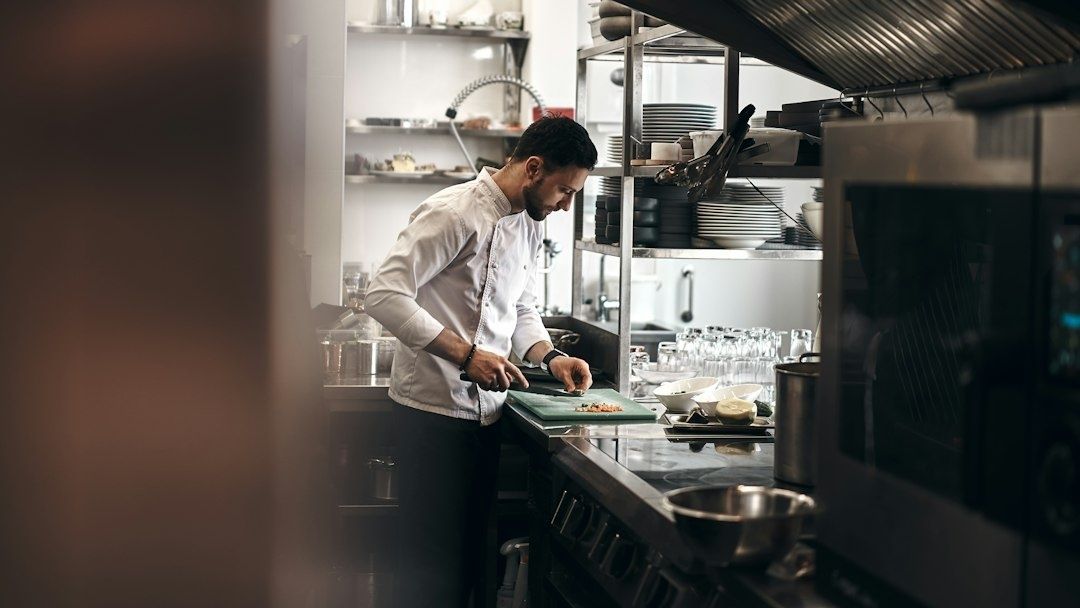
This kind of flexibility is central to successful farm-to-table cooking. Guidance from Restaurant Business on creating a farm-to-table menu emphasizes flexibility, preservation, menu control, culinary knowledge, and collaboration with farmers. Those principles become practical tools during an afternoon pivot. A kitchen that has planned interchangeable textures and flavor structures can move decisively instead of improvising dish by dish.
| Planned seasonal centerpiece | Real-time culinary pivot | Technique that preserves balance |
|---|---|---|
| Young peas with sweet cream and herbs | Charred snap peas or tender beans with cultured cream | Bright herb oil and a restrained fermented accent |
| Roasted heirloom carrots with earthy jus | Glazed winter squash or brassica stems | Infused vegetable broth with toasted spices |
| Delicate spring greens | Blanched or grilled cabbage leaves | Lacto-fermented seasoning and warm vinaigrette |
| Fresh berries with pastry cream | Preserved fruit, poached orchard fruit, or late-season citrus | Acidic syrup, crisp texture, and aromatic garnish |
Pantry preparations act as culinary insurance. Lacto-ferments supply acidity and savory depth, infused broths provide continuity when a sauce”s central vegetable changes, and preserved oils carry the aroma of herbs that may no longer be available in abundance. Pickled stems, dried mushrooms, smoked vegetables, and fruit reductions can connect a new ingredient to the menu”s original character. These components also protect profitability because they extend usable inventory and reduce the need for expensive emergency purchasing.
Agility does not mean abandoning discipline. The revised dish still has to move through the existing station plan, meet allergy and dietary requirements, and be portioned consistently across the dining room. A strong kitchen updates its prep lists, communicates the change to service, recalculates yields, and confirms that the substitute can be replenished if the dining room sells through it. That speed is operational craft, not improvisation for its own sake.
Rethinking Waste and Aesthetic Standards on the Line
Sudden supply changes often reveal how much value is hidden in produce that would never reach a conventional menu. Irregular roots can become smooth purees, bruised fruit can be cooked into savory sauces, and leafy tops can be blended into oils or folded into dumpling fillings. When a planned garnish disappears, the kitchen may discover that stems, leaves, skins, and seeds offer a more distinctive replacement than a purchased decorative element.
Commercial appearance standards are part of a larger food-system problem. Produce can be rejected because it is too large, too small, oddly shaped, blemished, or inconsistent in color, even when it remains safe and flavorful. Research on changing food waste regimes in Africa”s transition to export-oriented production shows how formal quality standards, supply-chain relationships, perishability, and unequal bargaining power can determine where waste occurs and who absorbs its cost. The lesson applies well beyond avocados. Waste is not simply a matter of careless handling; it can be produced by the rules governing what counts as marketable.
Climate pressure adds another layer. Changing temperatures can affect ripening, storage conditions, pest activity, and the quality of harvested crops. For a restaurant, that means receiving ingredients with shorter usable lives or unfamiliar damage patterns. Careful inspection, rapid processing, and accurate storage records become essential. A low-waste kitchen treats quality as a question of function rather than uniform appearance, while still maintaining clear safety standards.
- Inspect bruised stone fruit, trimming damaged areas before roasting, fermenting, or reducing it into a savory glaze.
- Separate frost-affected brassica leaves from firmer cores, using the leaves for purees and the cores for grilling or braising.
- Convert surplus herbs and greens into infused oils, sauces, frozen cubes, or dehydrated powders.
- Use stems, peels, and bones in stocks, broths, pickles, and staff meals whenever food safety permits.
- Track yields and trim so purchasing decisions reflect usable product rather than headline case weight.
Structural waste mitigation also depends on menu design. A restaurant can offer a stable seasonal foundation while allowing garnishes and secondary components to move with supply. It can buy whole animals with a plan for charcuterie and stocks, preserve peak produce before it becomes urgent, and maintain a clear communication channel with growers about oversupply. These systems turn abundance into opportunity instead of allowing a short harvest window to become a disposal problem.
Translating Culinary Improvisation at the Dining Table
A last-minute menu change succeeds only when the front of house can explain it with confidence. Servers should know what changed, why it changed, how the dish tastes, and whether the substitution affects allergens, dietary needs, or wine pairings. The language should sound intentional rather than apologetic. “The farm”s young greens were affected by the freeze, so the kitchen is serving charred cabbage with fermented herb broth” gives the guest a clear sense of place and purpose.
Sommeliers must respond just as quickly. If an earthy roasted root course becomes a bright vegetable dish with an acidic puree, a heavy, oak-driven wine may suddenly feel cumbersome. The pairing might shift toward a saline white, a lightly chilled red, or a sparkling wine with enough freshness to match the new texture. This is where distributors, farmers, and restaurant teams all matter. Traceability, temperature control, inventory information, and flexible delivery practices help the dining room understand not only what arrived, but why the ingredient is in the best condition for tonight”s service.
- Confirm the facts before briefing. Identify the replacement ingredient, farm or supplier, preparation, allergens, portion, and expected availability. Guesswork undermines trust.
- Taste the finished dish. Servers should experience its temperature, texture, acidity, aroma, and finish so descriptions remain precise rather than purely technical.
- Learn the ingredient story. Record the weather event, harvest timing, preservation method, or grower relationship in language that can be shared naturally at the table.
- Align the recommendation. Confirm wine, cocktail, and nonalcoholic pairings, then rehearse how to present the change warmly to regulars, first-time guests, and diners with dietary concerns.
For guests, the best approach is curiosity without treating the kitchen”s flexibility as a novelty act. Ask what changed, which course best represents the farm”s current harvest, and whether a spontaneous pairing has been created for the substitute. A thoughtful server can then guide the table toward an informed choice. The evening”s surprise may be a sharper expression of terroir than the dish originally printed, because it reflects the exact weather, harvest, and decisions that shaped that service.
Embrace the Thrill of the Unprinted Special
True farm-to-table dining is an active performance, not a static catalog of local ingredients. Its credibility appears when a restaurant honors growers without forcing nature into a predetermined script. The kitchen may change a puree, replace a garnish, reshape a course, or introduce an entirely new special, yet the experience remains deliberate because the team understands flavor, pacing, cost, and service.
On the next dinner outing, ask which ingredients arrived that day, whether any course changed after the menu was printed, and what the sommelier would pour with the spontaneous substitution. Choose dining rooms that speak specifically about farms, preservation, and seasonal decisions rather than relying on vague local language. The strongest restaurants do not hide volatility behind polished presentation. They make it part of the welcome, turning a 4 PM disruption into the dish worth remembering.
By Magnus
- 16, Oct, 2026
- 0 Comments