
The Micro-Seasonality Paradox: When Farm-to-Table Means Rewriting Tonight’s Dinner Menu

The 4 PM Call That Upends Service

At four o”clock, a fine-dining kitchen is already speaking in shorthand. Stock simmers in polished pans, herbs are being picked for precise garnish, pastry teams are checking temperatures, and the dining room is moving from setup toward welcome. Then the phone rings. A grower explains that an overnight freeze has damaged the tender greens, or that a dry spell has reduced the expected harvest of young squash. The ingredient listed on the menu exists only in a quantity too small for tonight”s reservations.

That call exposes the weakness of the static farm-to-table chalkboard. A printed list of asparagus, peas, greens, and berries can suggest that nature follows a restaurant”s service calendar. It does not. Shoulder seasons are volatile, with temperature swings, irregular rain, pest pressure, transport delays, and uneven ripening all capable of changing a harvest between the morning delivery and the evening seating. For diners, the most honest local menu may be the one that changes after the reservation has been made.

This is the micro-seasonality paradox. The more seriously a restaurant commits to nearby farms, the less control it has over a fixed culinary script. Authentic sourcing therefore requires operational agility, not just attractive ingredient language. Chefs, purchasers, servers, and sommeliers must turn uncertainty into a coherent experience, preserving the meal”s rhythm while allowing the land to speak through a last-minute substitution. When handled well, agricultural volatility does not diminish hospitality. It creates the evening”s most memorable detail.

When Frost Rewrites the Kitchen Playbook

Small farms are especially exposed to abrupt weather. An unexpected freeze can bruise or blacken delicate leaves, while an unseasonal dry spell can slow growth, concentrate flavors, or reduce a planned harvest to a few crates. Climate shifts also affect timing. Warmer conditions may lengthen some growing seasons, yet altered precipitation and more frequent extreme events can make production less predictable. The USDA”s overview of Agriculture in the Midwest describes how changing temperatures, precipitation patterns, and severe rainfall already influence production and profitability across a region with an exceptionally broad agricultural base.

For a chef, these changes are felt in the space between a promising crop report and an actual delivery. Heirloom tomatoes may arrive in mixed sizes, tender lettuces may be too fragile for a composed salad, and brassicas may develop tougher outer leaves after stress. A kitchen cannot simply ask a farm to produce a replacement on demand. It must decide whether to reduce portions, change the garnish, alter the cooking method, or remove the dish entirely while protecting the guest”s expectations and the restaurant”s financial plan.

The most resilient operations balance loyalty to individual growers with a broader regional network. One farm may supply salad greens, another roots, another storage crops, and a distributor may provide a carefully vetted backup when a narrow harvest fails. This does not make the menu less local. It recognizes that regional food systems are networks rather than single-source pipelines. A restaurant can support small producers while maintaining enough sourcing depth to serve a multi-course menu without pretending that every farm experiences the same weather at the same time.

  • Build relationships with several farms that produce complementary crops.
  • Design dishes around techniques and flavor families rather than one irreplaceable ingredient.
  • Keep preserved, fermented, and dried components ready to bridge sudden gaps.
  • Train purchasing and culinary teams to approve substitutions quickly and document them clearly.

Anatomy of an Emergency Afternoon Recipe Redesign

An emergency redesign begins with triage. The chef identifies what has disappeared, what remains in sufficient quantity, and which parts of the planned dish are essential to its identity. A roasted spring vegetable course built around sweetness, smoke, and earthy depth might become a grilled cabbage course with the same broad architecture. A delicate green puree may be replaced by a sharp herb broth, while a planned berry accent gives way to a preserved fruit condiment. The objective is not to imitate the missing ingredient. It is to preserve balance, pacing, and emotional effect.
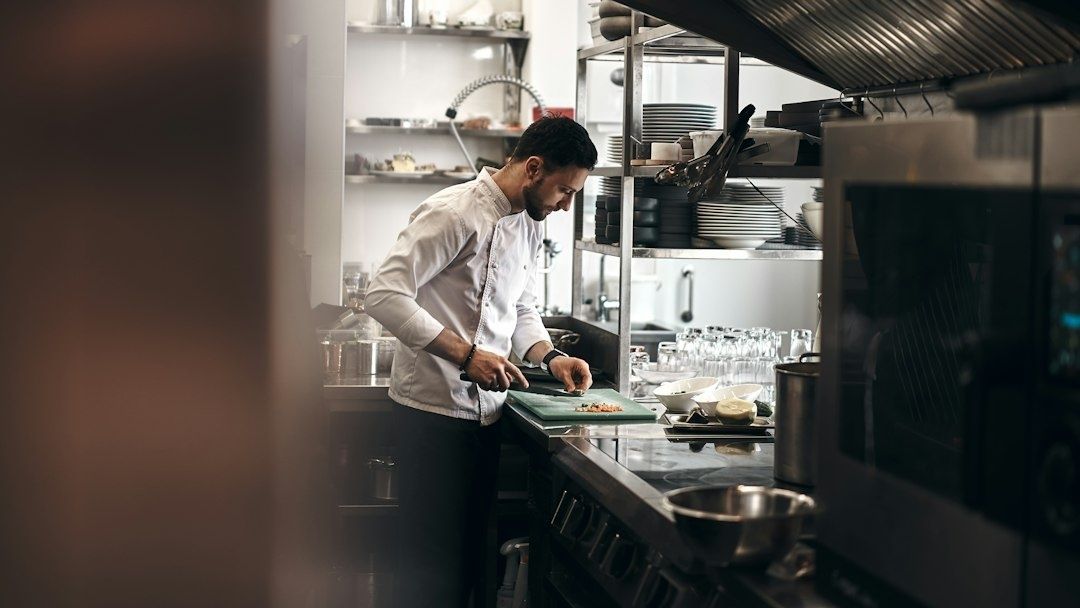
Chef chops ingredients in a professional restaurant kitchen
A flexible mise en place gives the kitchen room to preserve a dish”s balance when the harvest changes without warning.

This kind of flexibility is central to successful farm-to-table cooking. Guidance from Restaurant Business on creating a farm-to-table menu emphasizes flexibility, preservation, menu control, culinary knowledge, and collaboration with farmers. Those principles become practical tools during an afternoon pivot. A kitchen that has planned interchangeable textures and flavor structures can move decisively instead of improvising dish by dish.

Planned seasonal centerpiece Real-time culinary pivot Technique that preserves balance
Young peas with sweet cream and herbs Charred snap peas or tender beans with cultured cream Bright herb oil and a restrained fermented accent
Roasted heirloom carrots with earthy jus Glazed winter squash or brassica stems Infused vegetable broth with toasted spices
Delicate spring greens Blanched or grilled cabbage leaves Lacto-fermented seasoning and warm vinaigrette
Fresh berries with pastry cream Preserved fruit, poached orchard fruit, or late-season citrus Acidic syrup, crisp texture, and aromatic garnish

Pantry preparations act as culinary insurance. Lacto-ferments supply acidity and savory depth, infused broths provide continuity when a sauce”s central vegetable changes, and preserved oils carry the aroma of herbs that may no longer be available in abundance. Pickled stems, dried mushrooms, smoked vegetables, and fruit reductions can connect a new ingredient to the menu”s original character. These components also protect profitability because they extend usable inventory and reduce the need for expensive emergency purchasing.

Agility does not mean abandoning discipline. The revised dish still has to move through the existing station plan, meet allergy and dietary requirements, and be portioned consistently across the dining room. A strong kitchen updates its prep lists, communicates the change to service, recalculates yields, and confirms that the substitute can be replenished if the dining room sells through it. That speed is operational craft, not improvisation for its own sake.

Rethinking Waste and Aesthetic Standards on the Line

Sudden supply changes often reveal how much value is hidden in produce that would never reach a conventional menu. Irregular roots can become smooth purees, bruised fruit can be cooked into savory sauces, and leafy tops can be blended into oils or folded into dumpling fillings. When a planned garnish disappears, the kitchen may discover that stems, leaves, skins, and seeds offer a more distinctive replacement than a purchased decorative element.

Commercial appearance standards are part of a larger food-system problem. Produce can be rejected because it is too large, too small, oddly shaped, blemished, or inconsistent in color, even when it remains safe and flavorful. Research on changing food waste regimes in Africa”s transition to export-oriented production shows how formal quality standards, supply-chain relationships, perishability, and unequal bargaining power can determine where waste occurs and who absorbs its cost. The lesson applies well beyond avocados. Waste is not simply a matter of careless handling; it can be produced by the rules governing what counts as marketable.

Climate pressure adds another layer. Changing temperatures can affect ripening, storage conditions, pest activity, and the quality of harvested crops. For a restaurant, that means receiving ingredients with shorter usable lives or unfamiliar damage patterns. Careful inspection, rapid processing, and accurate storage records become essential. A low-waste kitchen treats quality as a question of function rather than uniform appearance, while still maintaining clear safety standards.

  • Inspect bruised stone fruit, trimming damaged areas before roasting, fermenting, or reducing it into a savory glaze.
  • Separate frost-affected brassica leaves from firmer cores, using the leaves for purees and the cores for grilling or braising.
  • Convert surplus herbs and greens into infused oils, sauces, frozen cubes, or dehydrated powders.
  • Use stems, peels, and bones in stocks, broths, pickles, and staff meals whenever food safety permits.
  • Track yields and trim so purchasing decisions reflect usable product rather than headline case weight.

Structural waste mitigation also depends on menu design. A restaurant can offer a stable seasonal foundation while allowing garnishes and secondary components to move with supply. It can buy whole animals with a plan for charcuterie and stocks, preserve peak produce before it becomes urgent, and maintain a clear communication channel with growers about oversupply. These systems turn abundance into opportunity instead of allowing a short harvest window to become a disposal problem.

Translating Culinary Improvisation at the Dining Table

A last-minute menu change succeeds only when the front of house can explain it with confidence. Servers should know what changed, why it changed, how the dish tastes, and whether the substitution affects allergens, dietary needs, or wine pairings. The language should sound intentional rather than apologetic. “The farm”s young greens were affected by the freeze, so the kitchen is serving charred cabbage with fermented herb broth” gives the guest a clear sense of place and purpose.

Sommeliers must respond just as quickly. If an earthy roasted root course becomes a bright vegetable dish with an acidic puree, a heavy, oak-driven wine may suddenly feel cumbersome. The pairing might shift toward a saline white, a lightly chilled red, or a sparkling wine with enough freshness to match the new texture. This is where distributors, farmers, and restaurant teams all matter. Traceability, temperature control, inventory information, and flexible delivery practices help the dining room understand not only what arrived, but why the ingredient is in the best condition for tonight”s service.

  1. Confirm the facts before briefing. Identify the replacement ingredient, farm or supplier, preparation, allergens, portion, and expected availability. Guesswork undermines trust.
  2. Taste the finished dish. Servers should experience its temperature, texture, acidity, aroma, and finish so descriptions remain precise rather than purely technical.
  3. Learn the ingredient story. Record the weather event, harvest timing, preservation method, or grower relationship in language that can be shared naturally at the table.
  4. Align the recommendation. Confirm wine, cocktail, and nonalcoholic pairings, then rehearse how to present the change warmly to regulars, first-time guests, and diners with dietary concerns.

For guests, the best approach is curiosity without treating the kitchen”s flexibility as a novelty act. Ask what changed, which course best represents the farm”s current harvest, and whether a spontaneous pairing has been created for the substitute. A thoughtful server can then guide the table toward an informed choice. The evening”s surprise may be a sharper expression of terroir than the dish originally printed, because it reflects the exact weather, harvest, and decisions that shaped that service.

Embrace the Thrill of the Unprinted Special

True farm-to-table dining is an active performance, not a static catalog of local ingredients. Its credibility appears when a restaurant honors growers without forcing nature into a predetermined script. The kitchen may change a puree, replace a garnish, reshape a course, or introduce an entirely new special, yet the experience remains deliberate because the team understands flavor, pacing, cost, and service.

On the next dinner outing, ask which ingredients arrived that day, whether any course changed after the menu was printed, and what the sommelier would pour with the spontaneous substitution. Choose dining rooms that speak specifically about farms, preservation, and seasonal decisions rather than relying on vague local language. The strongest restaurants do not hide volatility behind polished presentation. They make it part of the welcome, turning a 4 PM disruption into the dish worth remembering.
The Art of the Scrappy Pantry: How Fine Dining Masters Zero-Waste Flavor

Why Fine Dining Is Turning Scraps into Culinary Gold

In the most thoughtful dining rooms, sustainability is moving beyond a polished phrase on the menu. The more compelling work happens behind the pass, where chefs reconsider what belongs in the bin and what deserves another transformation. Carrot tops become vivid oils, fish bones become broths, fruit skins become vinegar, and surplus bread may return as a sauce thickener or fermented seasoning. This is not austerity disguised as luxury. It is a more exacting form of hospitality, one that asks a kitchen to extract every worthwhile note from an ingredient before moving on.

For diners, the result can be remarkably expressive. Trimmings, collars, skins, seeds, and spent grains often carry concentrated aroma, minerals, fat, or texture. Through salting, drying, roasting, enzymatic fermentation, and careful aging, these side streams can produce flavors with greater depth than a pristine ingredient used only once. A tasting menu built around such techniques may move from bright fruit-scrap vinegar to a dark fish garum, with each course balancing richness against acidity. The pleasure lies in discovering that resourcefulness, handled with precision, can taste every bit as luxurious as abundance.

The Secret Chemistry of Scrappy Umami

Umami is often described as a single savory sensation, but the finest kitchens build it in layers. Koji, the mold culture used in foods such as miso and sake, supplies enzymes that break proteins and starches into smaller flavor compounds. Applied to mushroom stems, meat trim, cooked grains, or vegetable pulp, it can create a seasoning that is rounded, aromatic, and quietly persistent. The process is less about disguising leftovers than about making their existing potential more available to the palate.

Fish scraps are particularly valuable. Collars, heads, bones, skin, roe, and organs contain fat, collagen, minerals, and naturally savory compounds that can enrich a sauce or broth. A fish garum adapts the ancient logic of fermented fish sauce to a modern professional kitchen. One documented method combines fish trimmings with 50 percent water and 20 percent fine salt, then ferments the sealed mixture at approximately 40 degrees Celsius for seven days with daily stirring. The gall bladder must be removed because it can introduce an intensely bitter flavor. Kitchens may also work at room temperature, although controlled heat is recommended because fish ferments can be temperamental.

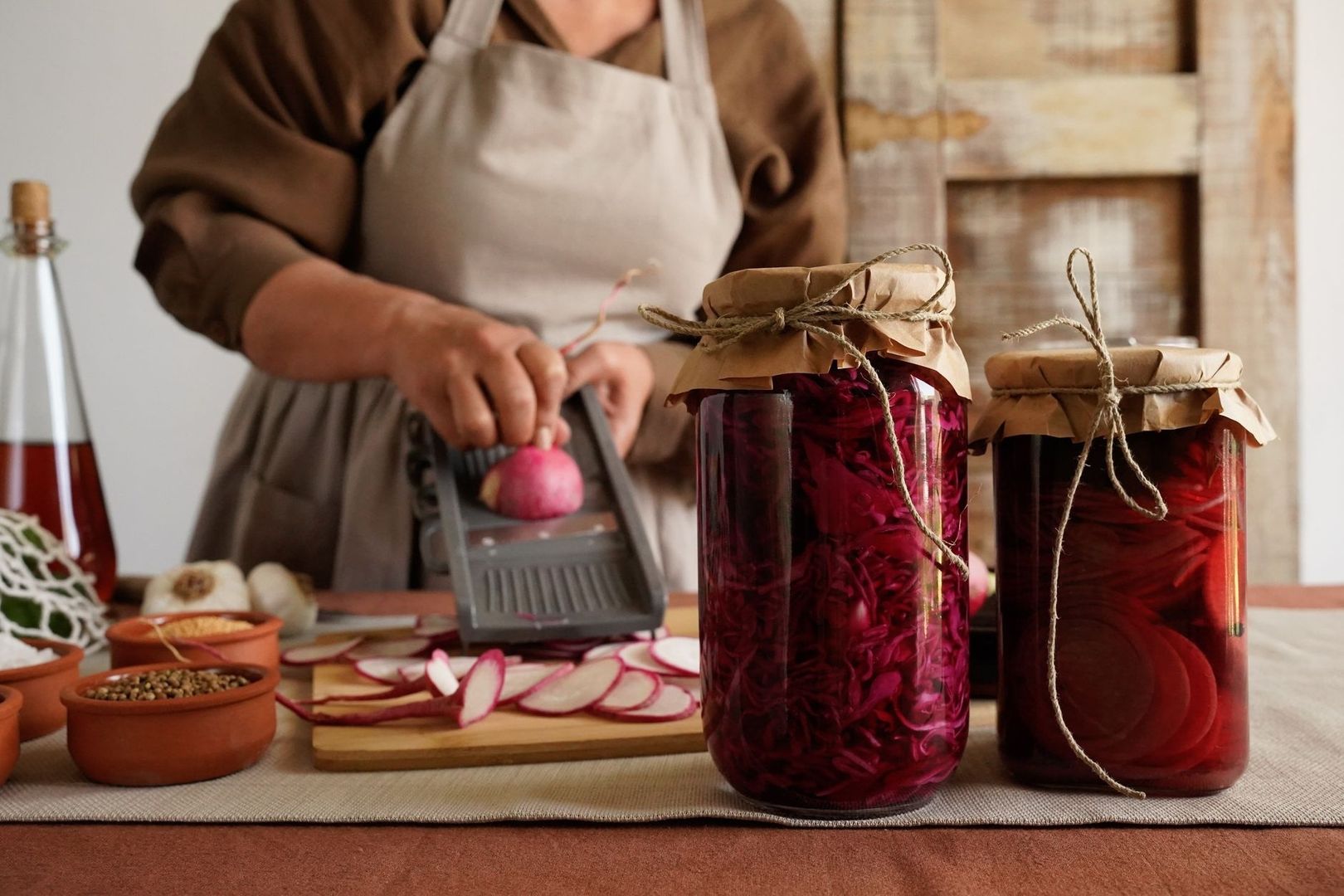
Person preparing radishes beside jars of preserved vegetables
Successful fermentation turns careful timing, salinity, and patience into concentrated flavors that give overlooked ingredients a deliberate place on the plate.

The important point is operational as well as culinary. A restaurant must decide whether a side stream is suitable for direct reuse, further processing, animal feed, or composting. The EPA wasted food scale offers a useful hierarchy for making those decisions, placing prevention and higher-value uses above disposal. That framework helps connect the romance of fermentation with the practical discipline of purchasing, yield calculation, labeling, and production planning.

  • Koji ferments can convert protein-rich or starchy trimmings into savory pastes and sauces.
  • Fish garum turns bones, heads, collars, and selected organs into a concentrated seasoning.
  • Roasting and reduction intensify bones, vegetable ends, and meat trim before fermentation or stock-making.
  • Accurate yield records show whether additional labor creates genuine culinary and financial value.

A restaurant that recovers more from a whole fish can reduce purchasing pressure while expanding its flavor vocabulary. The economics are not automatic, since cleaning, separating, fermenting, and bottling require skilled labor. Yet when a fish liver becomes part of a composed dish, bones become stock, and trim becomes garum, the kitchen is no longer accepting a high waste yield as inevitable. It is treating the animal with greater respect while creating distinctive seasoning that cannot be replicated by a generic sauce.

From Peel to Pour with Fruit Vinegars and Spent Grains

Fruit scraps bring a different kind of intensity. Stone fruit pits, apple cores, citrus rinds, bruised berries, and leftover pulp contain perfume, acidity, bitterness, and tannin. A living vinegar process can gather those qualities into a bright finishing ingredient. Fruit is combined with sugar water and an active vinegar culture, then left to ferment under a breathable covering at room temperature. After roughly two weeks, the solids are strained, and the liquid continues to develop for approximately another month, until the acidity is clean and pronounced.

For a fine-dining kitchen, the appeal is not simply thrift. A fruit-scrap vinegar can be tailored to a particular course or cocktail. Plum skins may bring a wine-like tartness to duck or foie gras, while apple cores can produce a gentler vinegar for shaved fennel, shellfish, or a sparkling aperitif. Citrus rinds contribute aromatic oils and a pleasing edge, although the quantity and bitterness must be managed carefully. Some preparations use a previous vinegar culture, and an accelerated version may include grain alcohol or vodka to support fermentation and acidity. Coverings must also be secure enough to discourage fruit flies, a small but important detail in a professional prep area.

Spent brewery grains offer another substantial stream. Once their sugars have been extracted for beer, the moist grains still retain fiber, toasted aroma, and a soft, malty character. They can be folded into sourdough, baked into crackers, dried for seasoning, or simmered into broths. Their texture rewards thoughtful handling: too much can make bread dense, while a moderate percentage adds chew and a warm cereal note. In a restaurant, spent grain may connect the kitchen and bar programs, giving a beer pairing a culinary echo beyond the glass.

  1. Notice the opening aroma. Fruit vinegar may smell floral, vinous, citrusy, or lightly earthy before it tastes sour.
  2. Track the acidity. The best shrub or finishing vinegar brightens a rich dish without flattening its underlying flavors.
  3. Look for texture. Spent-grain crackers and breads often bring a rustic crispness that contrasts with purées and tender proteins.
  4. Ask about the pairing. A zero-waste cocktail may use a vinegar shrub, clarified fruit, citrus oleo-saccharum, or a syrup made from cooked scraps.

These ingredients create a particularly enjoyable bridge between kitchen and bar. A fermented fruit shrub can sharpen a spirit-forward drink, while a vinegar reduction can make a fatty course feel lighter. The sensory sequence is often deliberate: sweetness arrives first, acidity follows, then a faint bitterness or fermented depth lingers on the finish. That balance is one reason side-stream ingredients can feel so polished when they reach the dining room.

Operational Realities and Food Safety in Closed-Loop Kitchens

Closed-loop cooking demands more than imagination. Ferments need clearly defined salt ratios, temperature ranges, vessel sanitation, production dates, and storage instructions. Fish garum, fruit vinegar, and vegetable ferments cannot be treated as interchangeable jars on a shelf. Each has a different substrate, moisture level, fermentation speed, and risk profile. A serious kitchen incorporates these preparations into its HACCP plan, with documented controls for receiving, preparation, fermentation, cooling, refrigeration, and service.

Contemporary food safety literature, including an Authoritative Source on fermentation, emphasizes that fermentation is not a guarantee of safety simply because it is traditional. Acidity, salt concentration, water activity, temperature, oxygen exposure, and time all influence whether desirable microorganisms can dominate. The regulatory protocols and control parameters detailed in FDA HACCP fermentation guidance illustrate why controlled conditions and validated processes matter. In practice, that means testing rather than guessing, especially when a restaurant serves a product made from fish, meat, dairy, or other high-risk ingredients.

There are also less glamorous constraints. Fermentation occupies refrigerator and cellar space, and a jar that takes weeks to mature ties up both real estate and working capital. Scraps must be separated at the moment of prep, not after they have been mixed with contamination or discarded packaging. Staff need training so that trim is stored consistently and dated correctly. These tasks can add labor, but waste tracking can reveal where the investment pays off. Industry guidance notes that commercial kitchens may waste 4 to 10 percent of purchased food before it reaches guests, a meaningful loss for a restaurant with a substantial annual food budget.

Kitchen challenge Practical control Guest-facing benefit
Variable scrap quality Separate, inspect, and label materials at the prep station Cleaner, more consistent flavor
Fermentation risk Use validated salt, temperature, time, and acidity controls Complexity without compromising safety
Limited storage Schedule batches around menu demand and maturation time Fresher, more purposeful specials
Labor overhead Track yields, labor, and waste reduction together A sustainable program that remains financially viable

The strongest programs therefore balance ambition with restraint. Not every peel should become a ferment, and not every bone is worth an elaborate recovery process. A restaurant must ask whether the finished ingredient improves the dish enough to justify the labor, storage, and monitoring. When the answer is yes, closed-loop technique becomes more than a green gesture. It becomes a disciplined part of the restaurant”s identity and an investment in better cooking.

How to Spot Real Closed-Loop Technique on the Menu

Menus often reveal the difference between a meaningful process and a vague sustainability claim. Look for specific language such as house-made amino sauce, fish-bone garum, scrap miso, koji seasoning, fermented shrub, fruit-pit vinegar, spent-grain sourdough, or vegetable-top oil. Specificity matters because it tells you what the kitchen actually did. A phrase such as “zero waste” is broad; “roasted pumpkin-seed garum with fermented stem salsa” communicates a technique, an ingredient, and a flavor direction.

Service is part of the experience as well. Ask the server how a fermented sauce was made, whether the beverage program uses fruit remnants, or which course best demonstrates the kitchen”s whole-ingredient approach. A knowledgeable sommelier can explain how acidity in a shrub mirrors a wine”s freshness, while a chef may suggest a course where a dark amino sauce supplies savory depth without overwhelming the main ingredient. These questions are especially worthwhile during a tasting menu, where small side-stream preparations often set the rhythm between richer and brighter courses.

  • Ask whether the restaurant makes its own garums, misos, vinegars, or shrubs.
  • Request a recommendation for the clearest example of whole-ingredient cooking.
  • Notice whether the menu identifies fermentation time, local sourcing, or a specific by-product.
  • Pair rich courses with bright fermented elements to appreciate the intended balance.

When executed well, these techniques improve the architecture of a meal. Acidity keeps a buttery sauce from feeling heavy, umami lengthens the finish of a vegetable course, and fermented fruit adds perfume without relying on extra sugar. The experience feels composed rather than corrective. That is the hallmark of real closed-loop cooking: sustainability is present in the mechanics, but flavor remains the reason the dish belongs on the menu.

Order with Curiosity and Taste the Future of Dining

The next time a menu offers a scrap miso, a fish garum, a fermented shrub, or bread made with spent grain, it is worth ordering with curiosity. These preparations may arrive in small portions, but their influence can be substantial. A few drops of concentrated sauce can connect the roasted, the raw, the sweet, and the bitter across several courses. A vinegar made from fruit remnants can make a cocktail feel vivid and precise. The pleasure is in tasting how time, salt, enzymes, and heat have turned overlooked material into something layered.

Supporting this work with your fork means rewarding restaurants that invest in careful sourcing, staff training, food safety, and thoughtful purchasing. Ask informed questions, choose dishes that show the kitchen”s point of view, and appreciate the labor behind every bottle, jar, and sauce. Forward-thinking chefs are redefining luxury not by using more, but by understanding more completely. In that dining room, resourcefulness does not diminish indulgence. It gives indulgence a sharper sense of place, purpose, and flavor.

The Art of the Pause: How Pacing and Front-of-House Timing Define an Unforgettable Meal

The Invisible Rhythm That Shapes a Memorable Dinner

A memorable dinner is not simply a procession of dishes. It is an emotional cadence, moving from anticipation to welcome, from first sip to first bite, and from lively conversation to the quiet attention that a beautifully composed course can command. The room, the service, and the kitchen must agree on that rhythm. A dining experience built around thoughtful restaurant hospitality understands that timing is part of the menu, even when it is never printed beside the ingredients.

The central challenge is balance. A table that is hurried never settles into pleasure, while a table left without acknowledgment begins to wonder whether it has been forgotten. The strongest front-of-house teams read the interval between those two failures. They notice the angle of a guest”s shoulders, the pace of conversation, the position of a fork, and the changing level of wine in a glass. These signals form an unwritten language, allowing servers, captains, and expeditors to adjust the evening without interrupting its flow.

The Psychology Behind the Unoccupied Dining Interval

Waiting feels different depending on what occupies the mind. A guest absorbed in conversation, studying a menu, or tasting a welcome pour experiences time differently from a guest staring at an empty place setting. David H. Maister”s influential analysis of service queues describes this distinction clearly: occupied time feels shorter than unoccupied time, while uncertainty and anxiety make a delay feel even longer. His discussion of perceived waiting can be read in the Columbia service psychology paper.

That principle is especially important in restaurants because not every pause is a problem. A few minutes between a crudo course and a warm entrée may give a guest time to notice the wine”s changing texture, finish a story, or reset the palate. The same interval becomes uncomfortable when no one has acknowledged it and no sensory detail suggests that the meal is progressing. Intentional breathing room has a shape. Accidental backlog feels shapeless.

Music and sound can give an interval that shape. Hospitality audio research commonly links slower-tempo music with longer visits, while faster music can encourage a quicker turnover. One industry analysis reports comparisons in which slow music was associated with dining visits 16 percent longer than a restaurant”s normal playlist, while diners exposed to standard playlist pacing lingered 20.8 percent longer than those seated during fast-tempo music-reflecting an approximate 17.2 percent reduction in dining duration under rapid tracks. Those figures should not be treated as a universal formula, but they illustrate how the room can influence behavior before a server says a word.

  • Acknowledgment tells guests that service has begun.
  • Useful menu guidance gives an interval purpose.
  • A measured music tempo helps the table settle.
  • Visible progress, such as a cleared course or refreshed glass, reduces uncertainty.

The most accomplished dining rooms therefore distinguish between delay and pause. A delay is unmanaged time. A pause is time given direction. A brief explanation that the next course is being finished to order, a quiet refill of water, or a well-timed wine presentation can turn waiting into part of the experience rather than an interruption to it.

Silent Signals Between the Dining Room and the Expeditor Pass

The pass is where the kitchen”s precision meets the dining room”s intuition. In a composed service, the conversation there is often nearly silent. An expeditor watches the readiness of plates while the captain watches the readiness of the table. The two perspectives must meet before a course leaves the pass. A dish can be technically perfect and still arrive too early if guests are deep in conversation, or too late if the table has already cleared its previous course and is ready for the next movement.

Captains evaluate a collection of small details. Silverware placed at an angle may indicate that a guest is still eating; aligned utensils may signal completion. A wine glass nearing empty can suggest that a pairing should be poured before the next course lands. A guest leaning toward the center of the table may be engaged, while a guest scanning the room may be seeking assistance. None of these cues is absolute, which is why experienced staff combine observation with discreet questions rather than relying on a rigid script.

Server placing food on a plated course at an elegantly set table
When the kitchen and dining room share the same sense of timing, each course arrives as part of the evening”s natural progression.

When the system works, several checkpoints synchronize the meal. When it fails, the consequences are immediately felt in the guest”s body and conversation.

Synchronized service checkpoint Uncoordinated dining pitfall
The captain confirms that the table has finished before calling the next course. New plates arrive while guests are still eating, forcing a hurried finish.
Wine is introduced with enough time for the table to taste it alongside the dish. The pairing arrives after the course, turning a planned contrast into an afterthought.
The kitchen receives one clear table status. Conflicting calls create staggered plates or unnecessary holding time.
The server reads the occasion and adjusts the pace. A birthday, date, or business meal is treated like a standard turn.

This choreography depends on respect between departments. The dining room cannot treat the kitchen as a vending machine, and the kitchen cannot treat the table as a fixed timer. The expeditor protects temperature, texture, and visual integrity; the captain protects the guest”s sense of ease. Their shared goal is not maximum speed. It is coherence.

How Environmental Atmosphere Governs Guest Cadence

Acoustics are among the most powerful and least noticed forces in a dining room. When background sound rises too high, guests compensate by speaking louder, repeating themselves, or abandoning conversation altogether. A restaurant audio analysis places average restaurant sound near 77 dBA and describes levels around 70 dBA or below as more comfortable for conversation, with conditions above 75 dBA increasingly difficult. The figures are not a substitute for on-site judgment, but they explain why a room can feel energetic at one table and exhausting at another.

Tempo matters alongside volume. A quick playlist can sharpen the sense of turnover, while slower selections tend to support lingering, fuller conversation, and a more relaxed progression between courses. Speaker placement also matters. Balanced coverage prevents one section from becoming dramatically louder than another, allowing a dining room to maintain a consistent identity from the bar to a corner table. For readers interested in the relationship between sensory design and wellbeing, hospitality atmospherics research offers a useful reminder that stress responses are shaped by multiple surroundings, not by a single stimulus in isolation.

Lighting performs a similar timing function. Brighter illumination can support arrival, menu reading, and the social energy of cocktails. As the meal develops, warmer and more focused light directs attention toward plates and faces, creating intimacy without requiring a formal announcement. A softer setting during dessert or after-dinner drinks gives the evening permission to lengthen. These changes are subtle, but diners register them as signals about what kind of attention the room expects.

  1. Arrival: Clear sound and welcoming light help guests orient themselves and understand the room.
  2. First courses: Moderate energy supports menu discovery, shared plates, and the opening conversation.
  3. Main courses: Stable acoustics and focused lighting encourage guests to slow down and notice texture, temperature, and pairing.
  4. Digestive pause: A calmer soundscape and softer light create space for coffee, dessert, or a final glass.

These environmental choices can influence physiological relaxation, but they should be approached with restraint. A dining room should not feel like a theatrical set forcing guests through predetermined emotions. The best atmosphere is adjustable, consistent, and attentive to the occasion. A lively group dinner may benefit from more pulse, while a quiet tasting menu requires acoustic clarity and longer, more protected intervals.

Cultivating the Intuitive Eye in Modern Hospitality Teams

The strongest dining room captains develop situational awareness through repeated floor immersion. Scripts are useful for consistency, but they cannot anticipate every table. A celebration may welcome a little ceremony; a romantic dinner may require fewer interruptions; a business meal may depend on discreet, predictable service. The captain”s role is to recognize those differences early and communicate them to the team without making the guests feel observed.

Operational management protects that intuition by managing the room”s real estate. Seating plans, reservation pacing, station assignments, and table turns all affect whether staff can remain composed. When a manager spaces arrivals intelligently, keeps pathways clear, and prevents a single server from carrying too much pressure, guests experience the benefit as calmness. Effective leaders also give staff authority to slow a course, hold a plate briefly, or adjust a sequence when the table”s needs change.

  • Read the table before approaching it.
  • Match the level of explanation to the guest”s interest.
  • Protect conversation during important moments.
  • Coordinate wine, clearing, and course calls as one sequence.
  • Escalate operational problems before they become visible frustration.

This is why hospitality management is far more than scheduling and checklist control. It combines psychology, logistics, coaching, crisis response, and aesthetic judgment. Under pressure, the manager”s composure becomes part of the room”s atmosphere. A steady team can absorb a delayed table, a difficult dietary request, or a sudden rush without transmitting panic to guests.

Savoring the Space Between Every Course

The pause between courses is where a meal often becomes memorable. It lets a wine pairing open, allows the last impression of charred allium or citrus to fade, and gives conversation room to develop beyond the food itself. When the interval is designed well, guests do not count the minutes. They feel that the evening has enough time for them.

On the next dinner out, notice the evidence of this choreography. Does someone acknowledge the table before a wait becomes uncertain? Do courses arrive after the previous one has genuinely finished? Is the room quiet enough for conversation, and does the lighting evolve as the evening moves forward? The answers reveal more than speed ever could. True hospitality is an ephemeral performance, executed table by table, in which timing turns service into narrative and empty space into luxury.