
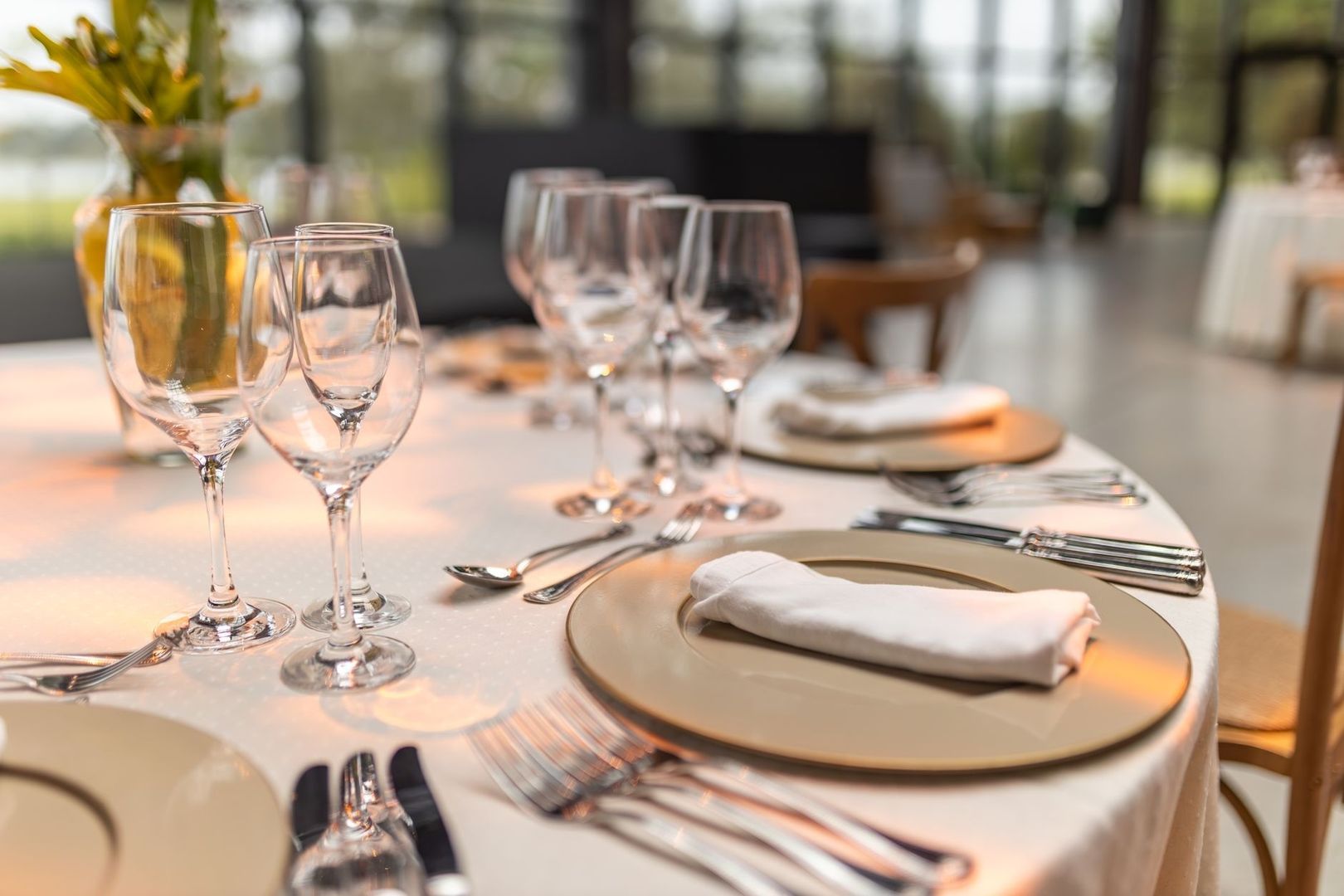
The Silent Code of Fine Dining: What Your Place Setting Is Actually Saying
The Quiet Language Spoken Across the Tablecloth
A fine dining table is less a test of etiquette than an intuitive communication system. Every glass, spoon, knife, and folded napkin has a practical purpose, but the arrangement also creates a calm visual map for the evening ahead. Once that map is understood, the place setting stops looking like a field of traps and begins to feel like an invitation: settle in, follow the rhythm, and let the meal unfold.
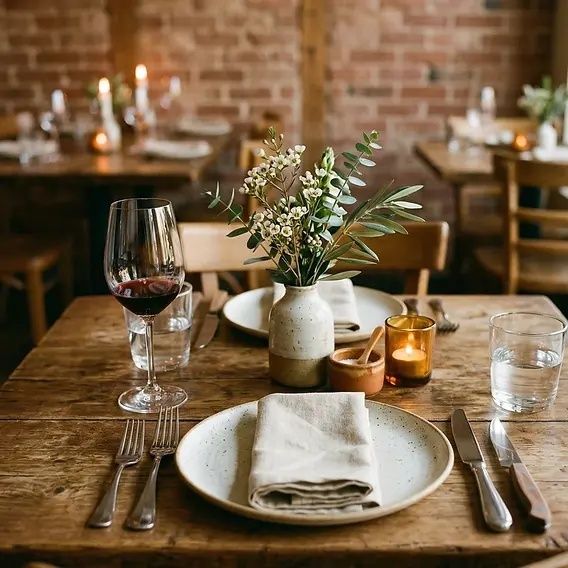
That rhythm is shaped by more than food. The low murmur of conversation, the polished gleam of silver, the scent of warm bread, and the measured arrival of each course all contribute to the experience. Servers read the table while guests read the room, often without either side needing to announce every decision. A fork placed at the right moment, a wineglass left ready for another pour, or a brief glance toward the server can become part of the choreography. Tableware evolved into this shared shorthand because hospitality works best when comfort feels effortless.
How Nineteenth-Century Dining Changed the Table Landscape
Many modern table settings make more sense when viewed through the history of service. In the eighteenth century, service à la française presented numerous dishes at once across the table. Guests selected from the spread, and the table itself became a display of abundance, rank, and visual theater. Elaborate arrangements could include multiple serving dishes, specialized utensils, and decorative objects, with the placement communicating both practical information and social standing.
The nineteenth century brought a decisive change as restaurants and private dining rooms increasingly embraced service à la russe. Diners experienced a revolutionary shift in meal progression with the rise of service à la russe, which introduced sequentially plated courses. Instead of presenting the entire meal at once, the kitchen and dining room coordinated a procession: an opening bite, perhaps a soup or fish course, a main preparation, then dessert and coffee.
This change required a different kind of table. A grand spread of every possible utensil was no longer the most efficient arrangement. The place setting had to support a moving sequence, allowing each course to arrive with the appropriate tool and then disappear without disturbing the next stage. Specialized forks, fish knives, sauce spoons, and dessert implements reflected changing foods, technologies, and service expectations. The table became less crowded, but more precisely organized.
Sequential dining also gave guests greater control over personal pace. A diner could pause to discuss a wine, linger over a sauce, or finish a course before the next one arrived, while the server could observe and adjust. The setting supported a dialogue rather than demanding performance. That remains the essential idea behind modern fine dining: the tools are there to make the experience smoother, not to turn dinner into an examination.
Mapping the Cover Without Pretense
The most reliable rule is simple: begin with the utensils farthest from the plate and work inward as courses progress. This outside-in principle applies in a tasting-menu dining room as readily as it does in a classic bistro. If a small fork sits beyond the main fork, it may be intended for a first course or salad. A soup spoon placed on the outer right usually belongs to the opening course, while the larger knife nearest the plate is commonly reserved for the main dish.
Specialized pieces are easiest to understand when connected to the food they serve. An oyster fork is compact because it is designed to lift shellfish cleanly rather than cut through a substantial portion. A sauce spoon helps gather a delicate jus or cream without forcing bread or a dinner knife into the task. A butter spreader is blunt and broad, suited to soft butter on bread rather than cutting meat. These details preserve the texture and presentation of the dish, which is why a restaurant may place an apparently unusual utensil only when the menu calls for it.
Understanding the layout becomes effortless when grounded in modern table setting etiquette. The goal is not to memorize every historical variation, since restaurants may adapt conventions to their cuisine, menu, or service style. Instead, read the setting as a road map and allow the server”s presentation to confirm the route.
| Place setting element | Typical position | Practical role |
|---|---|---|
| Dinner fork | Left of the plate | Main savory courses |
| Smaller fork | Outside or above the dinner fork | First course, salad, seafood, or dessert depending on the menu |
| Dinner knife | Right of the plate, blade facing inward | Main course cutting and portioning |
| Soup or sauce spoon | Right of the knives | Broth, soup, sauce, or a spoon-led course |
| Bread plate and spreader | Upper left | Bread service and butter |
| Water glass | Above the knife | Water service throughout the meal |
| Wineglasses | Above and slightly to the right of the water glass | Wine pairings or chosen pours |
Glassware follows a similar logic. The water glass is generally the largest and most consistently present, while wineglasses may be arranged according to the sequence of pours. A slender glass may suggest sparkling wine, a broader bowl may suit aromatic whites, and a generous red-wine glass can give a structured vintage room to open. If the arrangement differs from expectation, there is no need to guess dramatically. The server can explain the sequence in a single sentence, and that explanation is part of the hospitality.
Silent Signals That Direct the Flow of Service
Cutlery placement can quietly tell the dining room whether a guest is pausing or finished. During a break, the knife and fork may rest on the plate in an inverted V, with the knife blade facing inward and the fork tines directed downward according to common Continental-style guidance. The message is straightforward: the guest is still engaged with the course, so the plate should remain in place.
When the course is complete, the knife and fork are commonly placed parallel on the plate, angled toward the four-o”clock position, with their tips pointing toward roughly ten o”clock. The knife blade remains inward. Practices vary between restaurants and service traditions, so this signal should be understood as a helpful convention rather than an inflexible international code. A clear verbal cue, especially when the dining room is busy, is always acceptable.
- Use an inverted V or another resting position on the plate when pausing.
- Keep soiled utensils on the plate rather than returning them to the linen.
- Place knife and fork together when finished, generally in a four-o”clock alignment.
- Ask for a replacement utensil immediately if one falls or becomes unsuitable.
- Follow the restaurant”s lead when a bowl, underplate, or tasting-menu vessel changes the usual arrangement.
Returning used flatware to the bare table can disrupt both service rhythm and tabletop balance. It may soil the linen, create uncertainty about whether the course is finished, or require the server to replace an item that should have remained with the plate. For soup or dessert served in a deep bowl on an underplate, utensils may rest on the underplate rather than inside the bowl. The practical principle is consistent: used utensils stay with the dish unless the server provides another instruction.
Practical Habits for an Effortless Evening Out
The most polished diners are not those who never make a mistake. They are the guests who respond to small mishaps without allowing them to take over the evening. If a fork drops, leave it where it is and catch the server”s attention with a quiet request. If a course arrives before the table is ready, explain the timing preference directly. If a dish is not what was expected, a courteous question gives the restaurant an opportunity to correct the experience.
Fine dining service is designed to be collaborative. A server can often slow a tasting menu for conversation, coordinate wine pairings around dietary preferences, hold a course while a guest takes a call, or clear a plate before the next preparation arrives. These requests are easiest when made early and clearly. A couple celebrating an anniversary may prefer a spacious pace, while a business meal may benefit from a more compact progression. Neither approach is more correct; the right pace is the one that supports the occasion.
- Read the place setting first. Identify the plate, bread service, water glass, wineglasses, and the outermost utensils without trying to interpret every piece at once.
- Listen to the presentation. The server”s description will usually explain the course, the intended utensil, and any suggested pairing.
- Keep the table cleanly coordinated. Rest used cutlery on the plate, avoid reaching across another guest, and allow staff to clear vessels before rearranging them.
- Communicate pacing preferences. Mention celebrations, time limits, allergies, or a desire to linger before the meal gathers momentum.
- Let sensory enjoyment lead. Notice temperature, texture, aroma, acidity, and finish rather than concentrating on whether every movement looks perfectly formal.
One particularly useful habit is to treat the server as a guide rather than an examiner. Asking, “Is this the utensil for the next course?” is entirely reasonable, especially when a tasting menu introduces a small spoon, narrow fork, or unfamiliar vessel. In a well-run dining room, such questions are expected. They give the service team a chance to make the experience more personal and ensure that the dish reaches the palate in the manner the kitchen intended.
Reclaiming the Table as a Space for Presence and Connection
Tableware exists to facilitate comfort, pacing, and pleasure. Its historical complexity can be fascinating, but modern dining does not require a guest to perform an archival version of etiquette. The outside-in arrangement, the resting signal, and the finished position are useful because they reduce interruption and help the dining room respond discreetly. They are tools for hospitality, not measures of personal worth.
Approach the next fine dining evening with curiosity rather than apprehension. Notice how the first glass sets the tone, how a sauce spoon protects the final glossy spoonful, and how the pause between courses creates space for conversation. Follow the utensils naturally, communicate when needed, and allow the restaurant”s choreography to carry the evening. When the table is read as a dialogue instead of a test, fine dining becomes what it was designed to be: a carefully paced opportunity for presence, connection, and memorable food.
By Magnus
- 24, Nov, 2026
- 0 Comments