
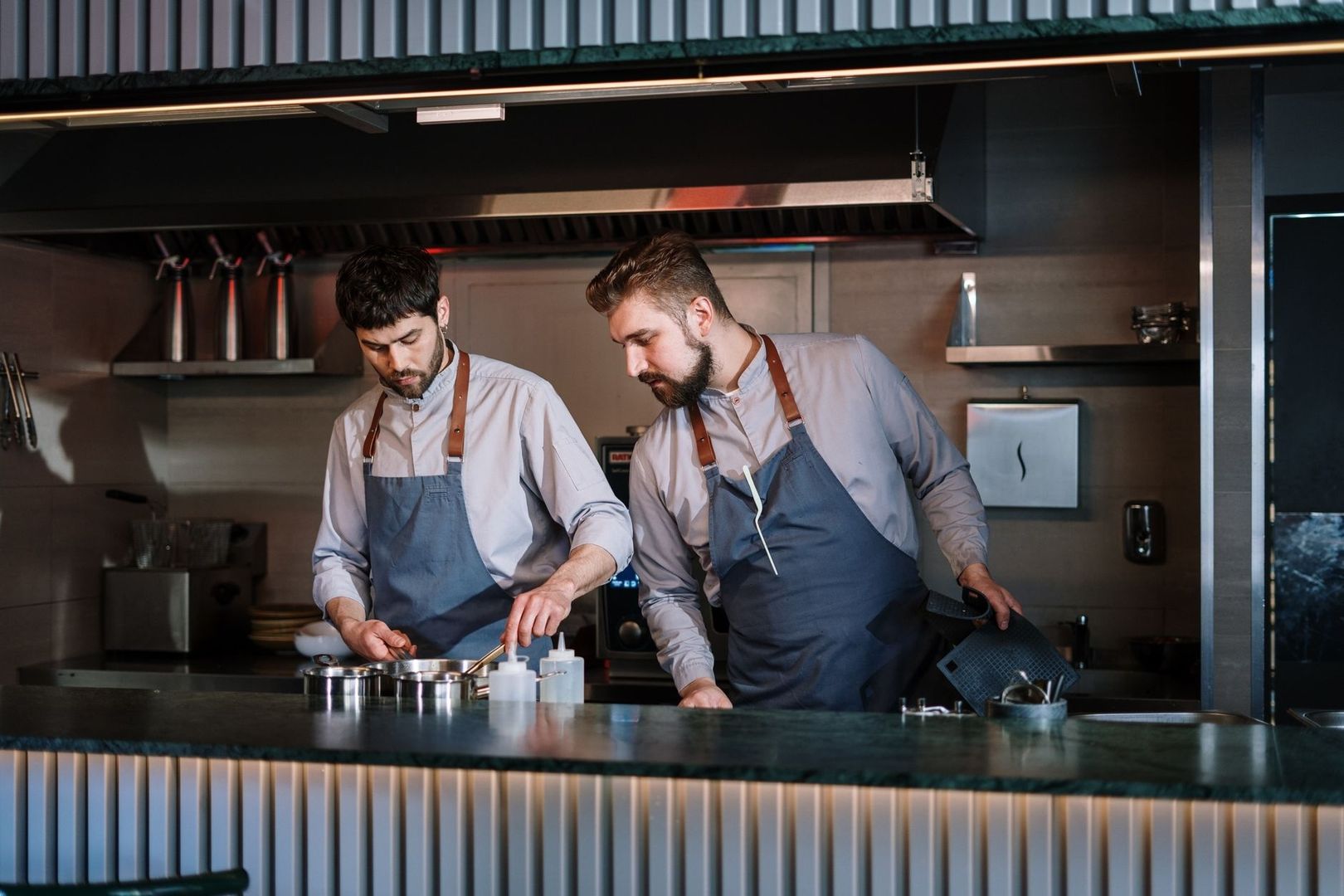
Beyond Escoffier: How the Modern Kitchen Brigade Rewrote the Rules of Dinner Service
The Sizzle Beyond the Velvet Curtain
A composed dining room can make dinner appear almost effortless. Glassware catches the light, a server sets down a plate without disturbing its architecture, and a sauce arrives with the precise gloss and temperature the chef intended. Beyond the swinging doors, however, the evening is anything but still. Pans hiss, burners flare, cooks call for garnishes, proteins rest beneath warm lamps, and several stations move toward one shared deadline: the moment a table is ready to eat.
That tension between visible calm and hidden motion has shaped professional kitchens for more than a century. Auguste Escoffier”s late-nineteenth-century reorganization of the Savoy and Ritz kitchens gave that motion a disciplined structure, assigning specialized duties within a military-inspired hierarchy. His system, documented in Auguste Escoffier”s biography, was revolutionary because it replaced disorder with accountability. Yet contemporary dining has introduced demands that no rigid chart can fully contain. Seasonal tasting menus change quickly, guests arrive with complex dietary requirements, and open kitchens place both technical performance and emotional composure on display. The most accomplished restaurants now preserve the brigade”s discipline while loosening its silos, building teams that work across stations with agility and shared ownership.
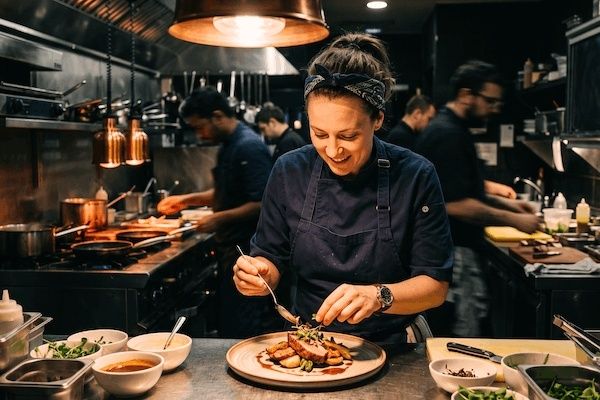
The Architecture of the Classical Station Line
The classical brigade de cuisine divided a kitchen according to specialization. At the top, the executive chef or chef de cuisine set the culinary direction and managed staffing, purchasing, costs, menus, and daily operations. The sous chef translated that direction into service, supervising preparation and coordinating the cooks. Beneath them, chefs de partie took responsibility for individual stations. The saucier handled sauces and often finished sautés; the rôtisseur managed roasted and braised meats; the grillardin focused on grilled items; the poissonnier prepared fish; and the garde manger oversaw cold dishes, salads, terrines, and other chilled preparations.
Additional positions could include a pâtissier for pastry, a potager for soups, a friturier for fried food, and a tournant who moved between stations wherever the service required reinforcement. Commis chefs supported the senior cooks through preparation and organization, while porters and dishwashers maintained the essential infrastructure that allowed the line to function. The size of the brigade varied with the restaurant. A grand hotel might employ more than twenty specialized positions, while a neighborhood dining room would combine several responsibilities under a much smaller team.
Specialization brought consistency, but it also created boundaries. A cook trained primarily on sauces might have limited exposure to butchery, pastry, or vegetable preparation. Menu changes therefore required retraining, new preparation lists, and careful redistribution of tasks. That structure could deliver remarkable precision when menus were stable, but it was less suited to restaurants built around daily market changes, tasting-menu improvisation, or highly individualized guest requests. Contemporary hospitality teams increasingly cultivate agility and precision on the line through cross-station collaboration, allowing cooks to retain areas of expertise while understanding how every component reaches the table.
| Classical station | Traditional responsibility | Modern hybrid responsibility |
|---|---|---|
| Saucier | Sauces, reductions, and sautéed preparations | Sauce finishing, vegetable glazing, protein support, and final seasoning across several dishes |
| Rôtisseur | Roasted and braised meats | Protein cooking, resting management, carving, and coordination with garnish stations |
| Poissonnier | Fish and shellfish preparation | Seafood cookery, allergy-aware substitutions, and shared temperature control |
| Garde manger | Cold dishes, salads, terrines, and composed starters | Cold preparation, vegetable work, plating, and early-course pacing |
| Tournant | Relief cook moving between stations | Cross-trained service specialist who fills gaps, handles refires, and protects the flow of the pass |
| Expediter | Order relay and plating oversight | Service conductor who aligns kitchen timing, dining-room communication, and guest-specific adjustments |
Why the Modern Dinner Table Demanded an Agile Line
The contemporary guest often encounters a menu that changes with the season, the farmer”s delivery, or the chef”s latest test. A tasting menu may shift from a chilled shellfish course to a fire-roasted vegetable, then move through a delicate fish preparation, a slow-cooked protein, and a dessert built around a fleeting fruit. Each course may involve several stations, and each may need to be adapted for vegetarian, vegan, gluten-free, dairy-free, or allergen-sensitive diners.
Rigid reporting lines become vulnerable when service departs from the expected script. A sudden allergy refire cannot wait for a long chain of authorization. A guest who cannot eat a sauce, garnish, or shared cooking medium needs a response that is both safe and decisive. A table-side pivot, such as holding a course for a delayed guest or pacing a celebration more slowly, also requires the front and back of house to interpret the same situation at once.
- Seasonal menus require cooks to learn new ingredients and techniques at a faster pace.
- Dietary accommodations demand direct communication and careful control of cross-contact.
- Open kitchens make posture, volume, cleanliness, and composure part of the guest experience.
- Small dining rooms often rely on every cook being capable of covering more than one station.
- Long tasting menus require shared pacing rather than isolated plate production.
The historical system remains useful as a foundation, but its original rigidity is increasingly at odds with the way restaurants operate. The traditional brigade de cuisine defined authority through clearly separated roles. Modern kitchens retain that clarity while allowing information, responsibility, and technical assistance to move laterally. In an open kitchen, this flexibility is especially important. Guests should see concentration rather than confusion, hear communication without aggression, and sense that every cook understands the meal as a whole rather than merely a single plate.
From Rigid Hierarchy to Shared Choreography at the Pass
The expediter remains one of the most important figures in this revised system, but the role has evolved. Rather than simply barking orders, the expediter reads the room, the ticket rail, the dining-room pace, and the condition of each station. The best expediters create rhythm. Their calls are concise, their timing is deliberate, and their authority comes from situational awareness. They know when to hold a garnish, when to fire a protein, and when a table needs a few additional minutes before the next course lands.
Cross-training gives that rhythm its resilience. A cook who understands both sauce finishing and vegetable preparation can rescue a station without disrupting the plate. A tournant can step into fish service, organize a refire, or help coordinate an unexpected dietary variation. The result is not a loss of specialization but a broader understanding of how specialization serves the guest.
- The ticket arrives. The expediter reads the order, identifies allergies or modifications, and confirms the intended pacing with the relevant stations.
- Stations prepare in parallel. Proteins are fired, sauces are brought toward finishing temperature, garnishes are assembled, and cold components are checked for seasoning and texture.
- The pass establishes the window. The expediter adjusts timing so that a rested protein, a properly emulsified sauce, and a crisp garnish reach the pass together.
- Plates are inspected collectively. Cooks and the expediter check temperature, portion, cleanliness, and the accuracy of guest-specific substitutions.
- The dining room receives the course. Servers deliver the plates with the correct explanation, while the kitchen turns immediately to the next sequence.
What Guests Taste When Cooks Work as One
Collaboration is not merely an operational virtue; it is a sensory condition. A sauce held at the right temperature retains its sheen instead of breaking. A fish fillet arrives moist because its resting time was respected. A crisp element remains crisp because the garnish station understood precisely when the plate would leave the pass. Even the balance between richness and brightness depends on several people making related decisions at the right moment.
When the kitchen operates as a unified team, the dining room often feels more generous and assured. Servers receive clearer information about ingredients, preparation, and substitutions, which makes menu storytelling more specific. A guest asking about a broth, a fermentation, or a regional ingredient receives an answer grounded in the kitchen”s actual work. Table adjustments also feel less disruptive because the restaurant is prepared to absorb them without making the guest feel like a problem.
- Temperature is deliberate. Hot courses arrive hot, chilled courses remain sharply cold, and delicate components avoid the dullness of waiting.
- Textures arrive in contrast. Crisp, tender, creamy, and toothsome elements retain their intended distinctions.
- Sauces taste integrated. They support the central ingredient rather than appearing as a late or disconnected addition.
- Plating looks calm. Garnishes are aligned, portions are consistent, and substitutions appear intentional rather than improvised.
- Pacing feels natural. Courses create appetite and anticipation without crowding the table or leaving it adrift.
Discerning diners can often spot this collaborative flow without seeing the kitchen at all. The server introduces a dish with confidence, the table is cleared without interrupting conversation, and the next course arrives at a moment that feels considered rather than automatic. At an open-kitchen counter, the evidence becomes even clearer: one cook finishes a sauce while another checks a resting protein, a third communicates a modification, and the expediter quietly aligns the final plates. There is motion, but no wasted motion. The choreography is visible in the pauses as much as in the activity.
Claim Your Seat at the New Chef Table
The quiet revolution in premier restaurants is not a rejection of Escoffier so much as a thoughtful revision of his achievement. The brigade proved that professional kitchens need structure, defined accountability, and disciplined preparation. Modern teams add permeability to that structure. Expertise remains valuable, yet information travels faster, cooks cover one another, and the guest”s needs take precedence over the protection of a station boundary.
For diners, an open-kitchen counter seat offers a particularly rewarding view of this change. It reveals the small decisions behind a composed evening: the sauce finished at the last second, the protein given its proper rest, the garnish placed only when the plate is ready, and the expediter balancing several tables without disturbing the room”s calm. The next time a dinner feels effortless, look beyond the polished plate. An entire collective is likely working in concert, turning heat, timing, skill, and hospitality into the memorable part of the evening.
By Magnus
- 9, Nov, 2026
- 0 Comments